
Key takeaways
- Clean with a soft cloth and mild cleaner.
- Wipe spills right away, especially near sinks.
- Tighten hardware once or twice a year.
- Touch up chips before they spread.
Everyday cleaning
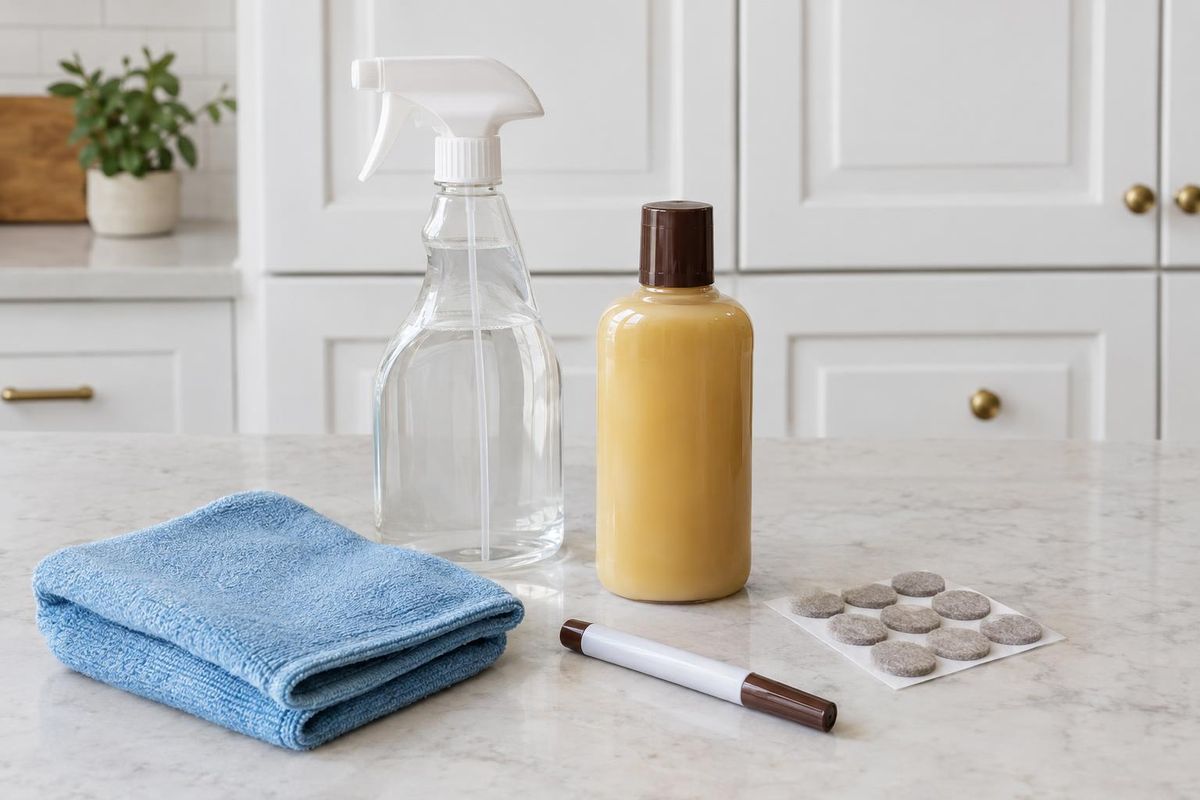
Wipe cabinets with a damp soft cloth and a mild dish soap solution, then dry them. Avoid abrasive pads and harsh chemicals that dull finishes. Pay extra attention around handles and near the range.
For painted cabinets, use gentle pressure to avoid burnishing the paint.
Moisture and heat
Moisture is the main enemy. Check under sinks for leaks, wipe up spills and use the vent hood when cooking. Keep small appliances that give off steam away from cabinet fronts.
Use a liner under the sink for protection.
Hardware and alignment
Once or twice a year, tighten hinge and pull screws and check that doors close evenly. Adjust hinges if a door rubs, and lubricate drawer slides lightly if they stick.
Replace worn hinges rather than forcing them.
Touch-ups and repairs
Use touch-up paint or stain on chips and scratches early to stop moisture from getting in. For deeper damage, ask a professional to repair or replace the part.
Keep a record of paint and stain names for future matching.
Quick answers
Can I use a vinegar spray on cabinets?
A mild cleaner made for cabinets is safer. Strong acids and harsh chemicals can dull or damage finishes.
How often should I deep clean cabinets?
A thorough cleaning every few months works well, with quick wipes in between.